

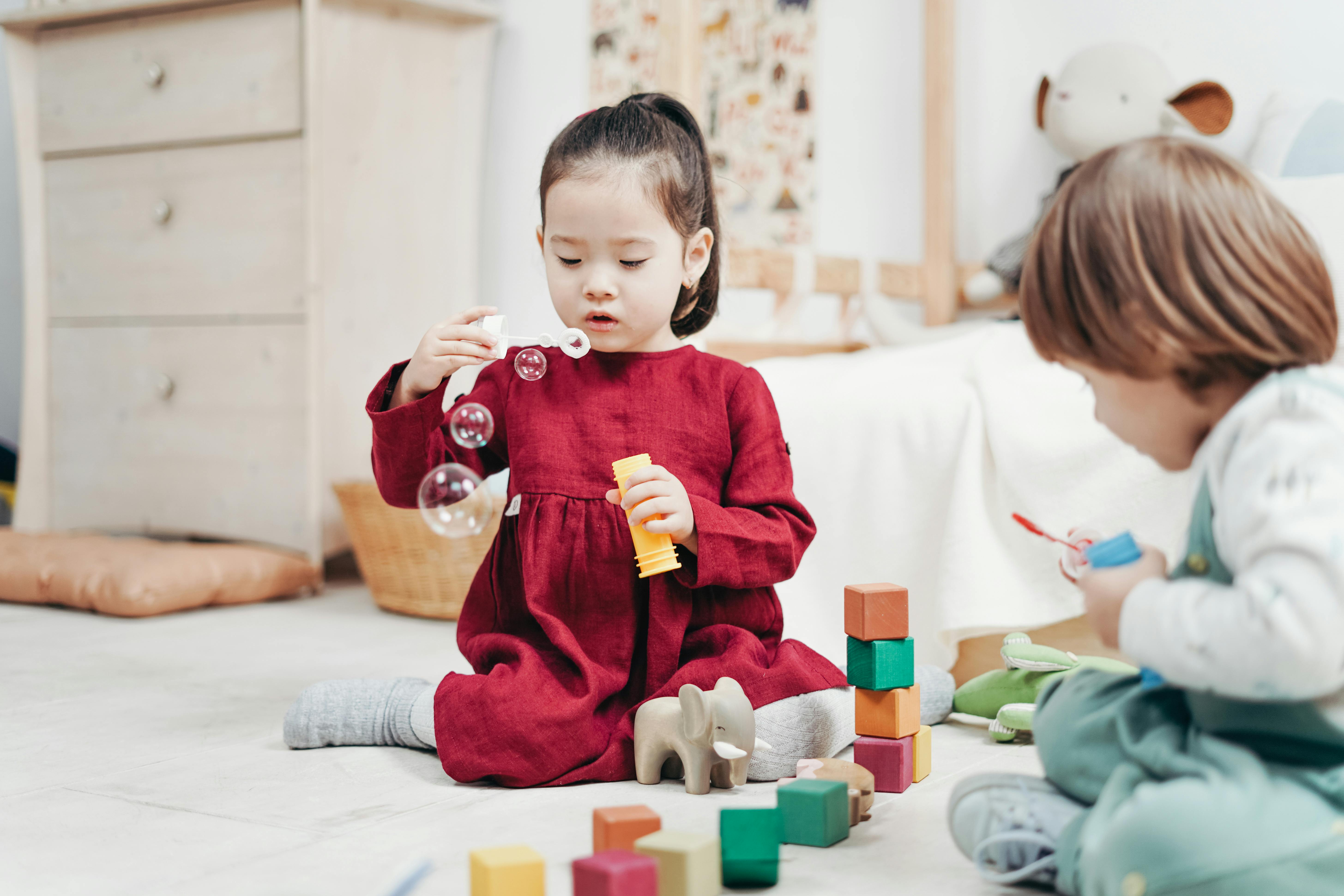
By 2 PM, most parents of toddlers are running on fumes. The morning has been a blur of snacks, spills, and constant supervision, and you still have hours to go before bedtime. Quiet time can save that stretch of the day, but only if you have activities that actually hold a toddler's attention without a screen.
The good news is that toddlers don't need anything fancy to settle down and focus. What they need is a small, contained task that feels interesting enough to explore on their own for ten or twenty minutes. Here are ten activities that have worked for real families, using things you likely already have at home.
1. Sensory Bins
Fill a shallow bin with dried rice, pasta, or beans, then add small scoops, cups, and toys for your toddler to bury and find. Sensory bins are calming because they engage touch without requiring much thinking. Set a towel underneath to make cleanup easier, and rotate the filler material every few weeks to keep it fresh.
2. Sticker Books
A pack of stickers and a blank notebook can occupy a toddler far longer than you'd expect. Peeling and placing stickers builds fine motor control, and most toddlers find the repetitive motion soothing. Look for reusable sticker books if you want something that lasts beyond one sitting.
3. Busy Boards
A busy board with zippers, latches, buttons, and switches gives toddlers something to manipulate independently. You can buy one, or build a simple version by attaching old locks, light switches, and buckles to a wooden board. The novelty of "grown-up" objects tends to hold their attention.
4. Water Painting
Give your toddler a cup of water and a paintbrush, then let them "paint" the fence, patio, or sidewalk outside. The water dries and disappears, so there's no mess to clean up indoors, and toddlers love watching the color change as they paint. This works especially well on warm afternoons.
5. Puzzle Time
Simple wooden puzzles with large pieces are ideal for toddlers who are just starting to problem-solve independently. Start with four to six pieces and increase the difficulty as your child grows more confident. Puzzles are quiet by nature and naturally require sustained focus.
6. Pom-Pom Sorting
Set out a muffin tin, a pair of kid-safe tongs, and a handful of pom-poms in different colors. Ask your toddler to sort the pom-poms by color into each muffin cup. This activity strengthens the pincer grasp toddlers need for writing later on, and the repetitive sorting motion tends to be genuinely relaxing for them.
7. Playdough Station
A small tub of playdough with a few simple tools, like a rolling pin, cookie cutters, and a plastic knife, can occupy a toddler for a surprising stretch of time. Keep the tools limited so your toddler isn't overwhelmed by choice. If you don't have store-bought playdough, homemade versions last just as long with basic pantry ingredients.
8. Magnet Play
A set of magnetic tiles or a magnetic drawing board gives toddlers something to build, erase, and rebuild without any real mess. Magnetic play also has a natural stopping point, since pieces tend to run out or drawings get erased, which makes it easier to transition into the next part of the day.
9. Book Basket
Fill a low basket with five or six board books and let your toddler "read" independently on a cushion or blanket. Toddlers often mimic the act of reading, flipping pages and narrating in their own way, even before they understand the words. Rotating the books every week keeps the basket feeling new.
10. Nature Tray
Collect a handful of leaves, pinecones, rocks, or shells on your next walk, then set them out on a tray with a magnifying glass. Toddlers are naturally curious about texture and detail, and a nature tray gives them something to examine closely without any instructions needed.
Making Quiet Time Actually Work
The activities above work best when they're introduced consistently, at roughly the same time each day, so your toddler starts to expect and settle into the routine. It also helps to rotate through only two or three options per day rather than laying everything out at once. Too many choices can overwhelm a toddler and shorten their attention span instead of extending it.
Start small. Even five uninterrupted minutes is a win in the toddler years, and that window tends to stretch naturally as your child gets used to playing independently. The goal isn't to fill every minute of the day. It's to give both of you a short, predictable pause that doesn't rely on a screen to get there.